
There was a great fear of learned and educated women
Listen to the series Science beyond the suit (in Slovene):
E2 Locked Doors
E6 Unfiltered
Dr. Katja Mihurko is the guest of Episode 2. and 6. of this podcast.
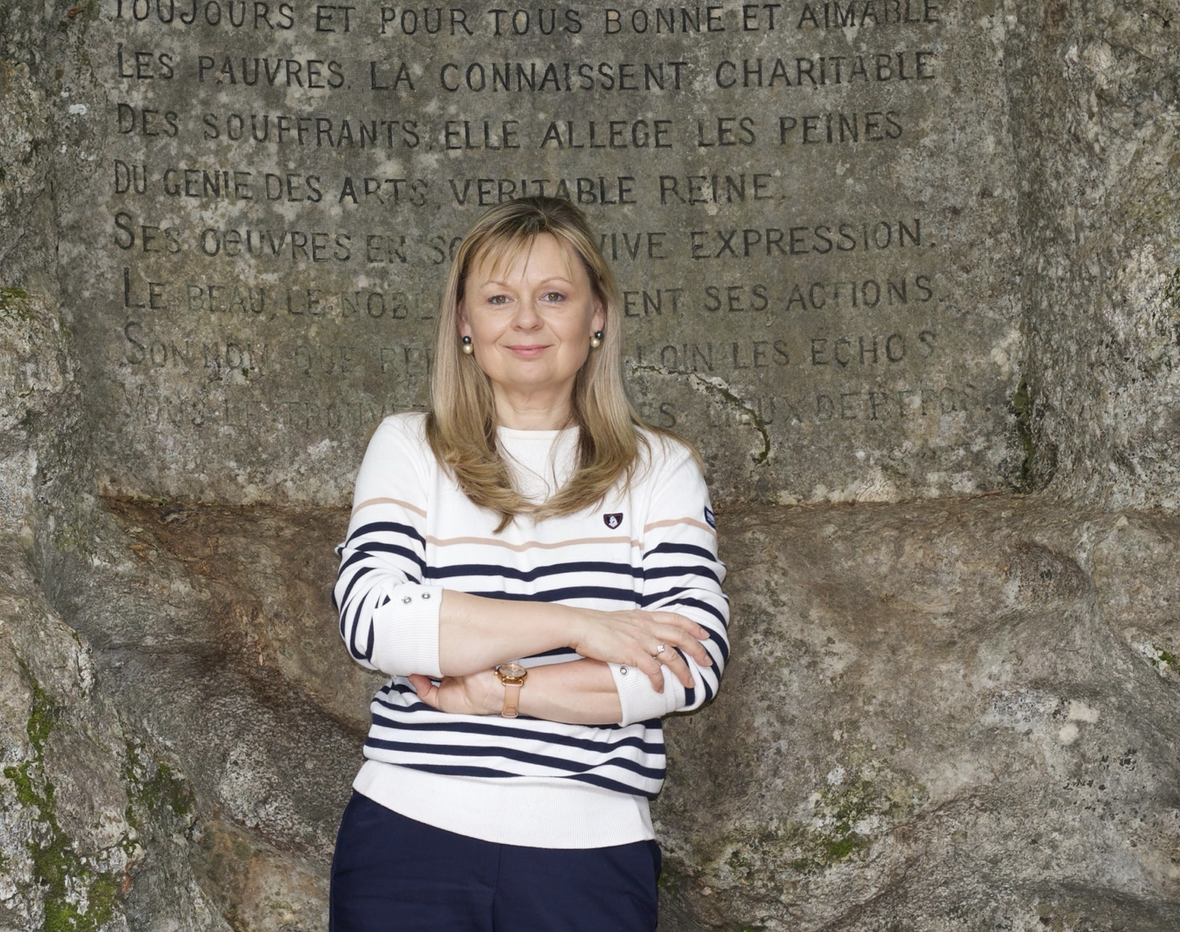
On the themed trail dedicated to the Romanian writer and queen Carmen Sylva above Opatija. Photo: Mladen Franko.
authors
Zarja Muršič
Maja Čakarić
edited by
Klara Škrinjar
Women writers and poets brought intimacy into literature and opened up topics that had not been discussed before, or that male writers had treated differently, even superficially. Marica Nadlišek Bartol, for example, described the everyday life of women, Pavlina Pajk wrote about women who were noble in spirit, yet persistent and courageous, while Zofka Kveder expanded the scope of sexuality, the language of love and passion, as well as painful issues such as infertility, the loss of a child, and spontaneous abortions. "Her attitude towards motherhood is also very important, as it is completely different from that of her mother's generation. Women expressed all these topics in a way that men did not. Men were not receptive to female pleasure, but Zofka Kveder put it into words," says Prof. Dr. Katja Mihurko, lecturer at the Faculty of Humanities and head of the Research Center for Humanities at the University of Nova Gorica, who researches representations of femininity and masculinity in literature and literary studies, with an emphasis on Slovenian literature. Zofka Kveder also understood hysteria, a "popular" medical term at the time, differently—as a kind of performance, a way for women to demand attention.
The Slovenian government has also declared 2026 the Year of Zofka Kveder, marking the 100th anniversary of her death. Dr. Katja Mihurko, together with playwright and writer Simona Semenič, called on the City of Women to submit an initiative for the Year of Zofka Kveder and now heads the program committee as part of these activities. Through this conversation, we are opening up space for a renewed reflection on her influence and legacy while also returning to an entire generation of women who pushed the boundaries of what was possible with their often daring writing.
The history of literary studies reveals a long chain of women who, through their work, gradually expanded the space for understanding and researching female authors. Such asMarja Boršnik, a literary historian, professor, and extraordinary member of the Slovenian Academy of Sciences and Arts. Where in this diverse legacy do you recognise your voice and your place?
Marja Boršnik means a great deal to me. I see her as the pioneer of research on female authors in Slovenia. She wrote important studies on Marica Nadlišek Bartol, Vida Jeraj, and Zofka Kveder. Just before World War II she edited seven books of her selected works which were published by the women's publishing house ‘Belo-modra knjižnica’. Her successor in editing Zofka Kveder's works was Erna Muser, who edited a selection of her works for the Kondor collection and arranged for the reprinting of the novel Njeno življenje (Her Life). She also wanted to write an essay about herself but unfortunately did not succeed. She also tried to get Zofka Kveder included in the collection Collected Works of Slovenian Poets and Writers, but the editor at the time was convinced that she was not a writer of sufficient quality. I am just one link in this chain. I am glad that I was able to devote my doctoral dissertation to the work of Zofka Kveder and that I edited five books of her works in the aforementioned collection. Of course, other researchers had already studied Zofka Kveder before me such as Dr. Silvija Borovnik, but other colleagues also write articles about her. The contributions of Dr. Alenka Jensterle Doležal, who also researches her Czech creativity, are very valuable.
We always ask ourselves whose shoulders we are standing on. When we look back, we see that the dominant literary discourse pushed women to the margins, overlooked them but at the same time we realise that women have made an important contribution to Slovenian literature, so we must not overlook their contribution.
Where would you actually lay the foundation stone?
With Pavlina Pajk who published a piece called A Few Words on the Women's Question (‘Nekoliko besedic o ženskem vprašanju’) back in 1884 and became a leading storyteller of her time. Her contemporary Luiza Pesjak is just as important. Reflections on the role of women in society were continued by Marica Nadlišek Bartol, who as editor of the first women's magazine ‘Slovenka’, became a mentor to a generation of authors born in the 1870s, including, of course, Zofka Kveder who published her first work in ‘Slovenka’. This is also where feminist thought began.
It is interesting to note that Zofka Kveder studied. She enrolled at the University of Bern, albeit only for a few months, and attended all kinds of lectures including economics and meteorology. Zofka Kveder was unable to study because she lacked financial resources but we must not forget that other Slovenian women completed their studies at that time, such as the first female doctor, Eleonora Jenko Groyer. Although Zofka Kveder studied for only a few months, she described her student experiences in a short novel entitled ‘Študentke’ (Female Students), in which she portrayed the cosmopolitan atmosphere at the University of Bern. She also wrote about this in a journalistic article published in German in the Swiss magazine ‘Haus-Zeitung’.
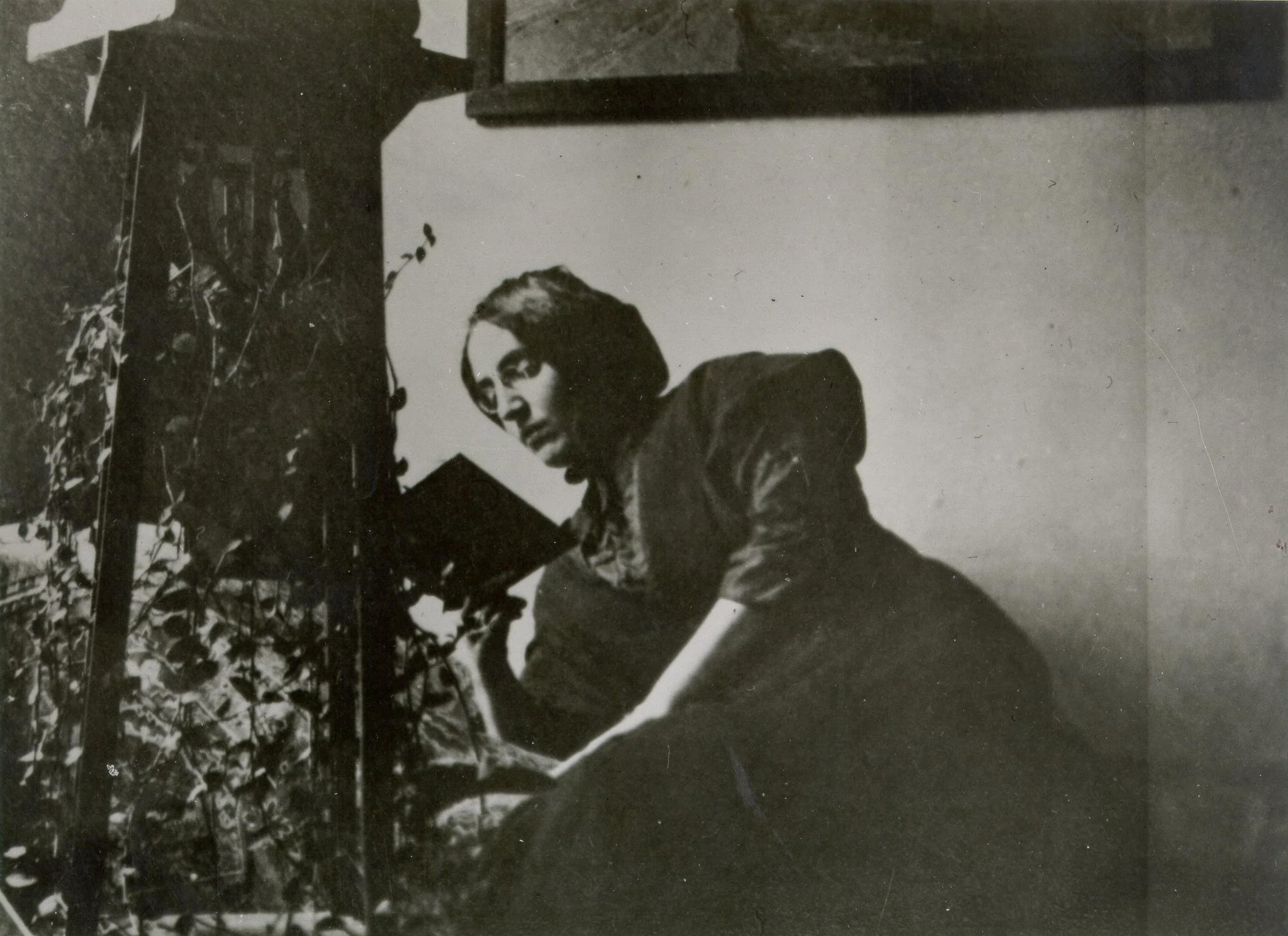
Zofka Kveder, photo: National and University Library, dLIB
Can you describe the women's movement at that time?
Society was afraid of educated women. Zofka Kveder therefore constantly emphasised in her articles that women did not threaten men because they were accused of this at every turn. When I read her work she didn't strike me as a militant feminist at first but when we consider what women were facing at the time, the fact that they dared to write about emancipation at all was extremely courageous.
Slovenian feminism at that time must also be understood through what women read. They read magazines that represented bourgeois feminism. Working-class feminism developed later in Slovenia, although Zofka Kveder was also sympathetic to women's working-class associations. However, bourgeois feminist thought was closer to her heart. She read German books and magazines that were available at the time. She also published in the Austrian magazine ‘Dokumente der Frauen’. She defended the position that an emancipated woman would still be a mother and remain a woman, not a "third sex," as they were accused of being at the time.
In her essay A Room of One's Own, Virginia Woolf wrote that a woman needs two things to be able to write: a room of her own that she can lock, and enough money to live on. What was the socio-economic situation of our authors? How did they fight for the conditions to create?
This is closely linked to education. The first feminist demand, since the 17th century, has been the right to education. Without education, in principle—unless you have an income, as Virginia Woolf writes—you cannot generate your own income that allows for anything more than basic survival. If you don't have your own income, you can't make decisions about your life and creativity.
Our first female writers mostly came from middle-class backgrounds. The first Slovenian poet, writer, and composer, Josipina Turnograjska, was born into a middle-class family. Unfortunately she died young and was unable to produce much work. The poet, writer, and translator Luiza Pesjak was a wealthy bourgeois, while Marica Nadlišek Bartol belonged to a generation that had gained intellectual professions as a teacher.
Teaching was the first profession that opened doors for educated women but it came at a price – it required teachers to remain celibate. When they married, they usually had to leave their jobs. Nadlišek Bartol is an example of a young, emancipated teacher, editor, and writer who, the moment she got married, stopped editing ‘Slovenka’ and stopped writing. She suffered greatly because of this. Her son Vladimir Bartol later wrote about how she cooked and cried at the same time at home.
Zofka Kveder was the first to make a living exclusively from her writing. Her writing enabled her to support not only herself but also her daughters. When she became editor of the Prague magazine ‘Domači prijatelj’ (Home Friend) in 1904, a factory owner's newsletter for selling products, she secured a regular income and got her own apartment where she moved with her daughter. It was her "own room" and her own apartment. Her letters show that this was her happiest period because she had money and her own space.
How liberating it must have been for them to enter the public sphere through their work and creativity!
Exceptional. They were constantly faced with criticism that they were crossing boundaries, so it was very important for them to connect with each other and support one another. Marica Nadlišek Bartol and Zofka Kveder were at the center of the networks surrounding the ‘Slovenka’ magazine. Suddenly, these young intellectuals and creators felt that, despite their problems, they were not alone. They wrote letters to each other, discussed their problems, confided in each other about their love affairs... These letters are truly precious. From them we can glean, if we are interested, where they drew inspiration for their work. From Marica Nadlišek's letters we can see that her close friend Milka Mankoč was the inspiration for the cosmopolitan character Olga, who only falls in love with women. The life stories of her sisters, who died in childbirth, most likely inspired Zofka Kveder to write a short story about a pregnant woman's fear of dying in childbirth because she lost her sisters in this way.
How did they cope with editorial criticism and censorship despite the support they had for each other?
There was no official censorship of books at the time but there was editorial censorship and self-censorship. Zofka Kveder fought quite a few battles in this regard. A letter has been preserved which shows that the editor of the newspaper ‘Ljubljanski zvon’ wanted to change her text Eva, but she did not allow him to do so. In this text a pregnant woman decides to commit suicide by stabbing herself in the stomach with a dagger. In the end the editor gave in.
Critics were often unfavorable towards her work because she portrayed different images of femininity. Writers were interested in young and beautiful women and Govekar liked to write about "spicy" ladies. There was almost no middle ground. Ivan Cankar also wrote about exploited girls and women but he was not interested in educated women.
Zofka Kveder, on the other hand, created diverse representations of femininity. Educated women are often the protagonists in her works. She showed that an educated woman does not bring anything dangerous or unusual into the space in which she operates. She opened up the field of sexuality and relationships between partners, including extramarital affairs. She had many problems in her private life; her first husband cheated on her several times, she experienced hardship and divorce, and she attempted suicide several times. Her literary characters are often women disappointed in love.
Emancipation quickly became a convenient tool for propaganda. We recall the famous example of cigarettes as "torches of freedom." How did the connection between advertising and the women's movement actually come about?
It's true, Edward Bernays used women's emancipation to sell cigarettes, saying that women would only be truly free once they started smoking. Here we see how consumer strategies work. On the other hand, the magazine ‘Domači prijatelj’ (Home Friend) edited by Zofka Kveder,was given as a gift to customers who purchased food products from the Prague factory owner Vydra. It was this steady income that made Zofka Kveder's life easier. She edited a literary magazine that included advertisements for the sale of products but within this she fought for space to write literature and earn her own living.
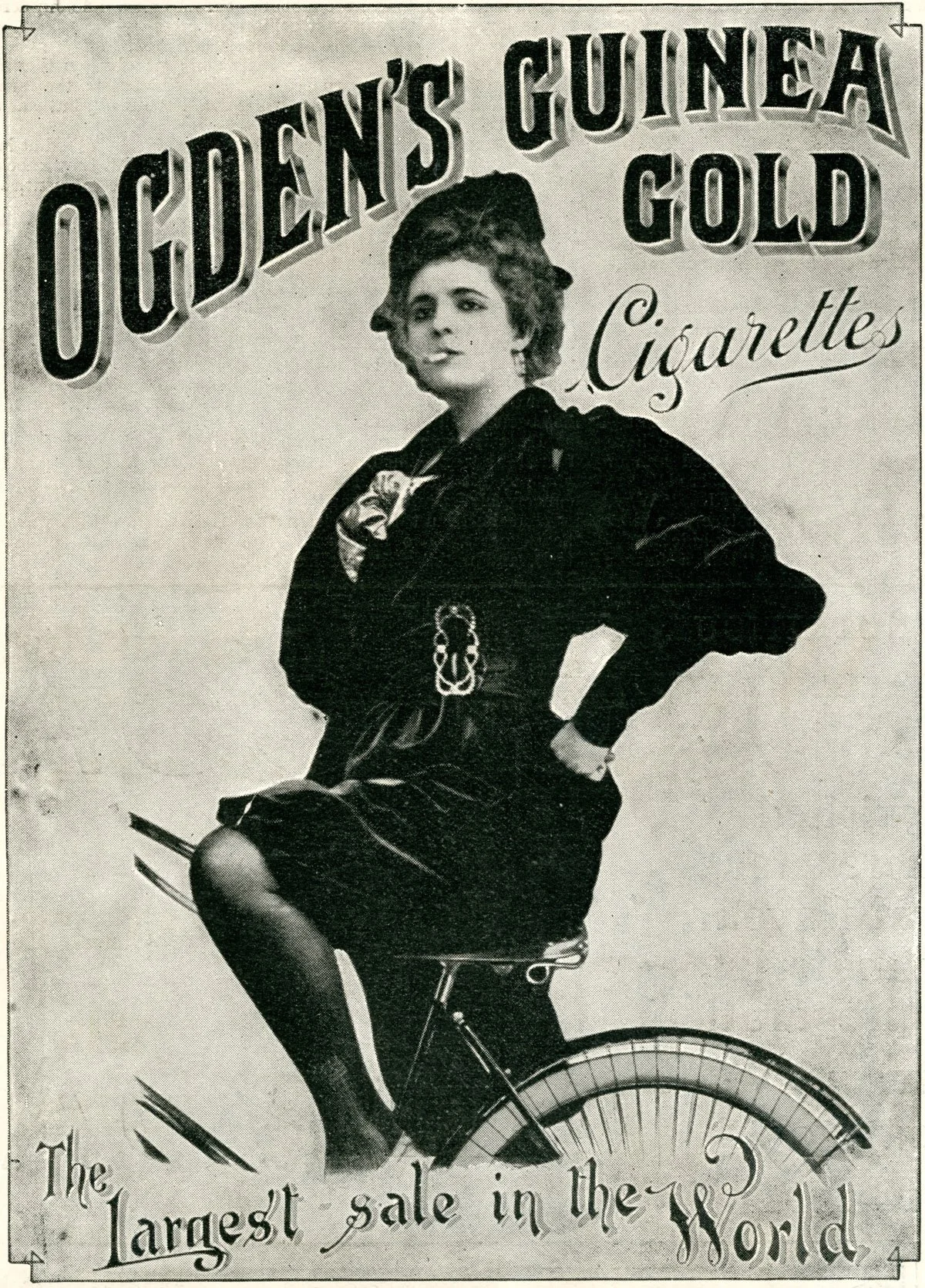
Photo: wikimedia commons
Did the male writers of that time—when they approached female characters—also create with a sense of responsibility?
Rarely. Their images were still very stereotypical. Today there are many works of literature that deal with infertility, the loss of a child, abortion – topics that were long pushed aside but which already appeared in the works of female authors at the end of the 19th century. Topics which Zofka Kveder also wrote about.
At that time, with perhaps a few rare exceptions, male authors were not receptive to these nuances. Simona Semenič pointed out another topic related to Zofka Kveder that is relevant today, namely that Zofka Kveder also wrote about euthanasia. She wrote about this in her novel Hanka, in which a sister helplessly watches her brother's inhuman suffering after he was wounded on the frontline.
Today, when we see women in the highest positions around the world and in our country it seems that the changes for which the women you are researching have fought are coming to fruition. How do you see this connection between historical efforts and today's achievements?
Take Angela Merkel, for example. Although she seems to be a conservative politician in many ways, the moment she became Bundeskanzlerin—the first time we ever said that word in the feminine form—was a turning point. Such an event tells women that a path previously only taken by men is now possible.
Zofka Kveder also constantly repeated the same message through her work: as a woman, I can make a living from my writing. She opened up spaces that men did not. Until equality becomes self-evident and until certain topics in society still need to be defended, it is necessary to draw attention to this.
Researching women in literature is reminiscent of archaeological work, the slow uncovering of voices that lay buried beneath layers of oblivion. How challenging is it to follow this path today?
Yes, sometimes I feel almost like an archaeologist. Fortunately, Marja Boršnik and her colleagues collected data that would be impossible to gather today. For example, she was able to interview people who knew Zofka Kveder and thus collected a wealth of valuable material. Nevertheless, there is still much that remains undiscovered. Fortunately, with the digitisation of various materials, we can now discover many things that were previously impossible or would have taken a very long time to find.
I myself had the opportunity to gain a different perspective precisely because when I was choosing my doctoral studies at the Faculty of Arts, a study program designed by Dr. Neva Šlibar, Dr. Eva Bahovec, and Dr. Milica Antić Gaber was launched. There were also many interesting lectures as part of the program designed by Dr. Svetlana Slapšak. This was an important platform where I discovered completely new methodologies. Without feminist theory and cultural history it would have been difficult for me to understand the breadth of Zofka Kveder's texts.
If in the recent past much was lost due to a lack of tools and sensitivity to women's voices, then in the 1990s thanks to women's studies, doors were opened. How is it today? Are research methods and approaches more accessible and open?
Today, we have the methodologies of women's studies and feminist theory at our disposal which allows us new readings. While studying comparative literature, I had to read a lot of literature by male authors because that was the canon. I had to discover Slovenian authors on my own and I had to find the keys to new readings through my own studies and lectures or seminars set up by my professors. The fact that we now have access to this tradition and can look at these texts through the lens of gender is crucial. Without a network of researchers and without a theoretical basis, much would remain overlooked. That is why it is important to continue researching this, perhaps also within the framework of different projects, such as the citizen science project ‘Biciklistinja’ (Female cycler) which we are planning in the year of Zofka Kveder.
Additional reading:
Katja Mihurko: Zofka Kveder: Prva klasikinja v Zbranih delih slovenskih pesnikov in pisateljev
Katja Mihurko: Gender and Narration in the writings of three 19th-century Slovene women: Pavlina Pajk, Luiza Pesjak and Zofka Kveder
Katja Mihurko: Zofka Kveder kot kulturna posrednica
Katja Mihurko: Med dejstvi in fikcijo: Zofka Kveder kot feministična ikona v delih sodobnikov in sodobnic
Zofka Kveder: Pravica do življenja
Zofka Kveder: Misterij žene
Zofka Kveder: Njeno življenje
The production of podcasts and other content was financially supported by ARIS through the 2025 Public Call for the (Co)financing of Science Popularization Activities.